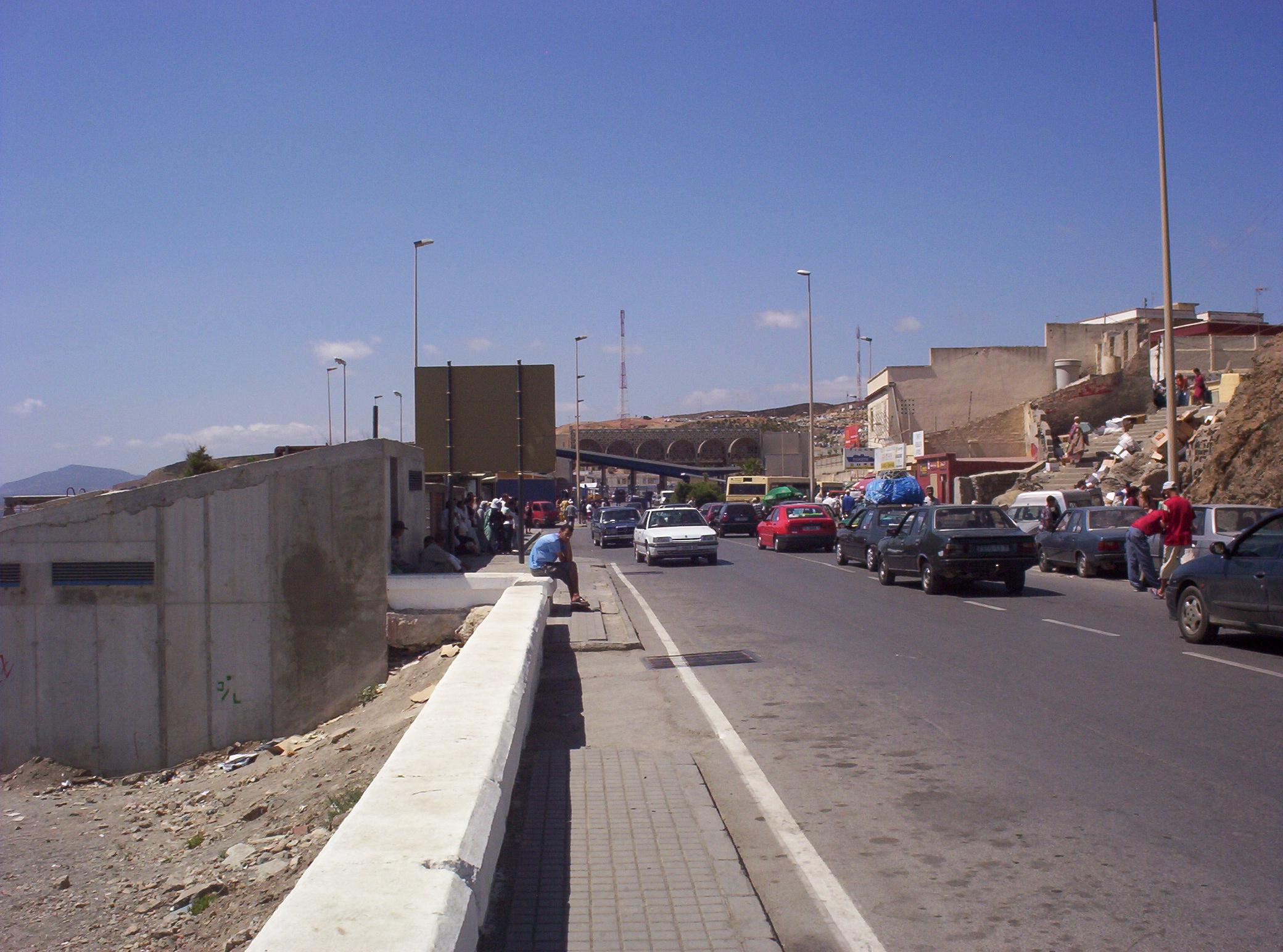
Spanish security forces installed a 500-meter floating barrier on Saturday at the Tarajal border crossing to prevent migrants from entering Ceuta [1].
The deployment marks an escalation in border security measures as Spain attempts to curb a surge of Moroccan migrants attempting to cross into the enclave. This specific installation targets the wave-breaker area, a known point of entry for those attempting to bypass traditional checkpoints [1, 2].
The floating barrier, which extends for 500 meters [2], was positioned along the kasser al-amwaj, or wave-breaker, at the Tarajal crossing [1, 2]. Spanish authorities said the measure is necessary to halt the flow of people attempting to enter the Spanish territory from Morocco [1, 2].
Ceuta is a Spanish autonomous city located on the north coast of Africa. Because it is an enclave, it shares a land border with Morocco, which has frequently become a flashpoint for migration crises. The use of physical barriers, ranging from fences to floating obstacles, is part of a broader strategy by Spanish security forces to secure the perimeter [1, 2].
Security personnel oversaw the placement of the barrier this weekend to ensure it remained stable against the sea conditions. The move follows reports of increased activity at the border, prompting the government to reinforce the wave-breaker with this air-filled floating structure [1, 2].
“Spanish security forces installed a 500-meter floating barrier on Saturday”
The installation of a floating barrier at the Tarajal crossing highlights the ongoing tension between Spain and Morocco regarding migration management. By targeting the wave-breaker, Spain is closing specific maritime gaps that migrants use to circumvent land fences, signaling a shift toward a more comprehensive, multi-layered physical blockade of the Ceuta enclave.


