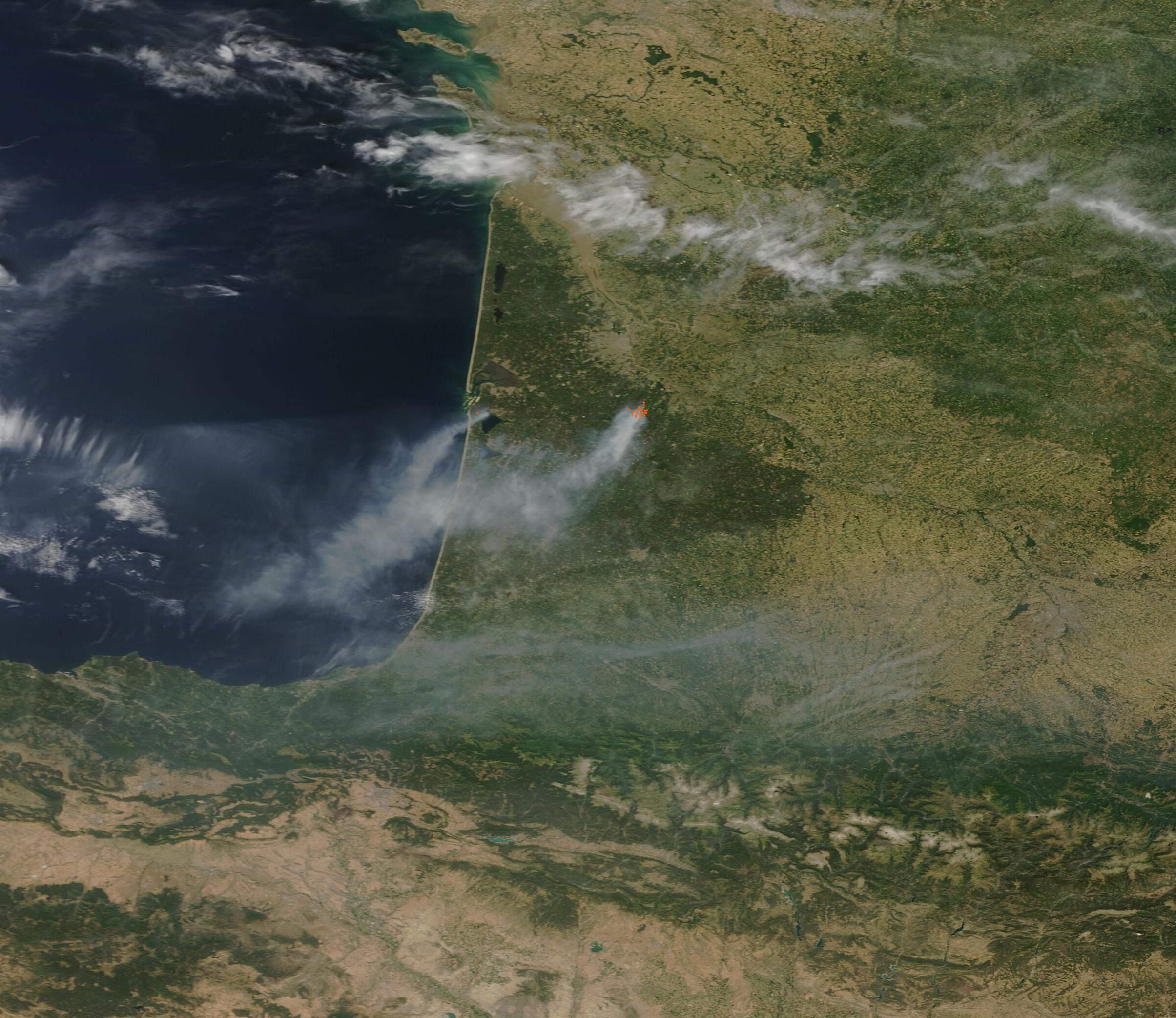
A massive wildfire devastated the commune of Le Porge in southwestern France on July 26, 2026, leaving the village in ruins [1].
The scale of the destruction highlights the increasing vulnerability of rural French communities to extreme weather events. With a significant portion of the village erased, the disaster creates an immediate humanitarian crisis for displaced residents and a long-term economic challenge for the Gironde department.
Aerial images captured on July 26 show a landscape of total desolation [2]. The fire tore through the commune, destroying most of its homes and reducing the village to rubble [3]. Reports on the exact number of lost residences vary slightly, with some sources saying more than 170 houses burned [4], while others specify that 185 habitations were annihilated [5].
The impact extended far beyond the village borders. The megafire scorched approximately 42,000 hectares across the Gironde region [5]. The intensity of the blaze left the area charred, with drone footage revealing the sheer magnitude of the environmental loss.
Local authorities and emergency services worked to contain the flames, but the speed of the fire outpaced containment efforts in Le Porge. The commune now faces a grueling recovery process as residents return to find their properties gone — a scene described by observers as one of complete devastation [3].
Recovery efforts will likely focus on temporary housing and infrastructure repair. The loss of nearly 200 homes in a single commune represents a catastrophic blow to the local community's social fabric and residential stability.
“The megafire scorched approximately 42,000 hectares across the Gironde region.”
The destruction of Le Porge serves as a stark indicator of the escalating risk of 'megafires' in Europe. When a single event can eliminate nearly 200 homes and burn 42,000 hectares, it suggests that traditional firefighting methods may be insufficient against the current climate trajectory in southwestern France.


