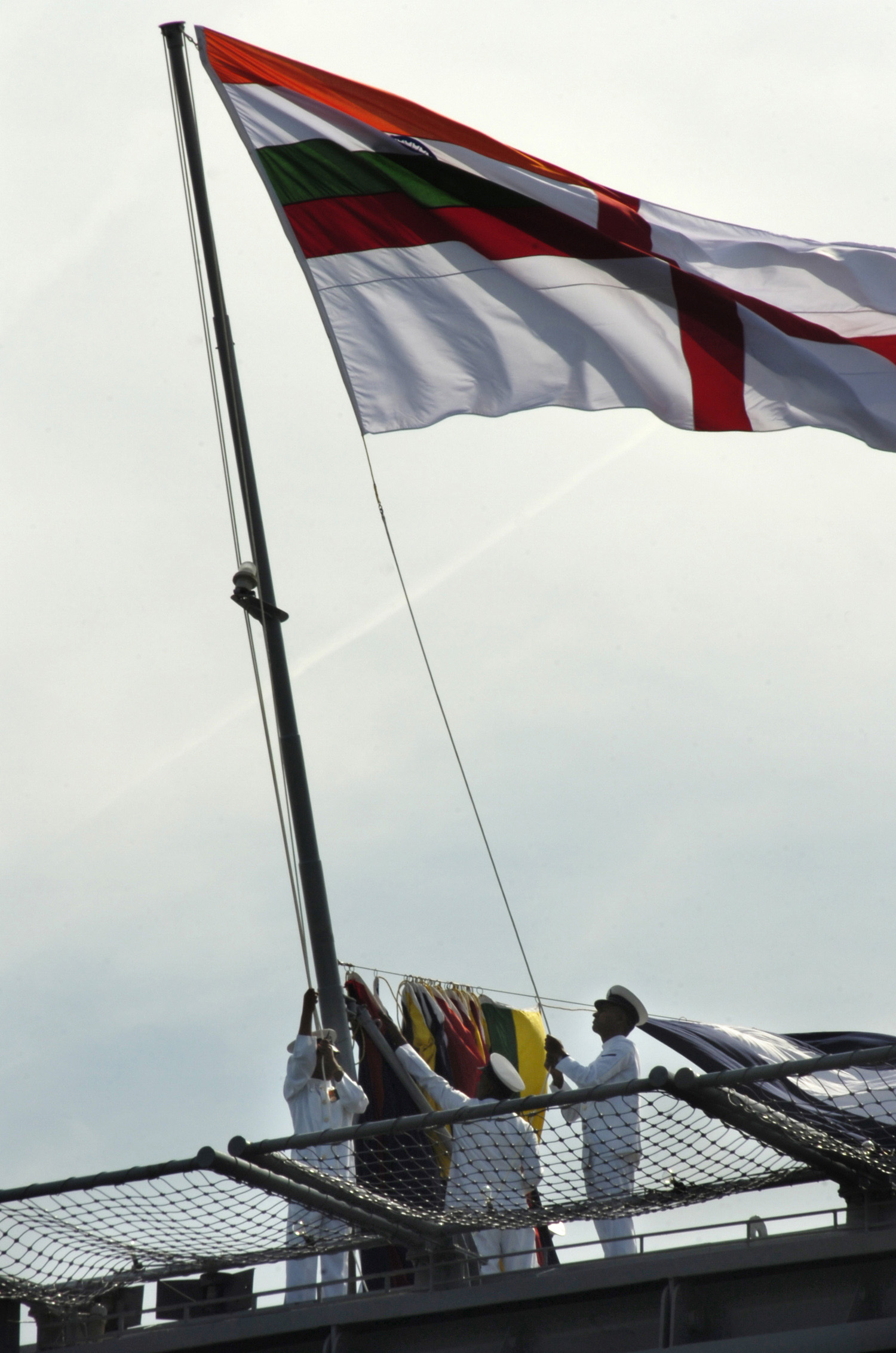
Prime Minister Narendra Modi commissioned three indigenously built warships into the Indian Navy in June 2024 [1].
These additions represent a strategic shift toward domestic military production. By reducing reliance on foreign suppliers, India aims to strengthen its national security and expand its industrial base under the ‘Make in India’ initiative [2].
The new fleet includes the stealth frigate Dunagiri, the large survey vessel Sanshodhak, and the anti-submarine warfare shallow-water craft Agray [2]. Each vessel serves a distinct operational role, from high-end combat and stealth operations to hydrographic surveying, and coastal defense [1].
The construction of these ships at Indian shipyards marks a milestone in the naval modernization drive. Defence officials said the project focuses on enhancing indigenous capabilities to maintain maritime security in the region [2].
The Dunagiri is designed for stealth, allowing it to operate with a lower radar cross-section to avoid detection. Meanwhile, the Sanshodhak provides critical mapping and survey data for naval navigation, and the Agray is specialized for detecting and neutralizing submarines in shallow coastal waters [1].
This commissioning follows a broader government effort to localize the defense supply chain. By building these assets domestically, India reduces the lead time for procurement and ensures that maintenance and upgrades are handled within its own borders [2].
“India aims to strengthen its national security and expand its industrial base under the ‘Make in India’ initiative.”
The integration of these three diverse vessels demonstrates India's growing capacity to produce complex naval architecture. By diversifying its domestic fleet to include stealth, survey, and anti-submarine capabilities, India is transitioning from a buyer of foreign platforms to a self-reliant maritime power capable of projecting force and maintaining surveillance across the Indian Ocean region.

'%2F%3E%0A%20%20%20%20%3Crect%20width%3D'1600'%20height%3D'900'%20fill%3D'url(%23v)'%2F%3E%0A%20%20%20%20%3Cg%20opacity%3D'0.08'%20fill%3D'%23ffffff'%3E%0A%20%20%20%20%20%20%3Ccircle%20cx%3D'1420'%20cy%3D'180'%20r%3D'220'%2F%3E%0A%20%20%20%20%20%20%3Ccircle%20cx%3D'1500'%20cy%3D'760'%20r%3D'120'%2F%3E%0A%20%20%20%20%3C%2Fg%3E%0A%20%20%20%20%3Cline%20x1%3D'80'%20y1%3D'172'%20x2%3D'220'%20y2%3D'172'%20stroke%3D'%23ffffff'%20stroke-width%3D'3'%20stroke-opacity%3D'0.6'%2F%3E%0A%20%20%20%20%3Ctext%20x%3D'80'%20y%3D'140'%20font-family%3D'Inter%2C%20-apple-system%2C%20Helvetica%2C%20sans-serif'%20font-weight%3D'700'%20font-size%3D'28'%20fill%3D'%23ffffff'%20letter-spacing%3D'6'%3EHANNA%20%C2%B7%20NEWS%3C%2Ftext%3E%0A%20%20%20%20%3Ctext%20x%3D'80'%20y%3D'230'%20font-family%3D'Inter%2C%20-apple-system%2C%20Helvetica%2C%20sans-serif'%20font-weight%3D'600'%20font-size%3D'40'%20fill%3D'%23ffffffb3'%20letter-spacing%3D'4'%3EWORLD%3C%2Ftext%3E%0A%20%20%20%20%3Ctext%20x%3D'80'%20y%3D'694'%20font-family%3D'Playfair%20Display%2C%20Georgia%2C%20serif'%20font-weight%3D'800'%20font-size%3D'110'%20fill%3D'%23ffffff'%20letter-spacing%3D'-1'%3ESri%20Lanka%20Dengue%20Cases%3C%2Ftext%3E%3Ctext%20x%3D'80'%20y%3D'820'%20font-family%3D'Playfair%20Display%2C%20Georgia%2C%20serif'%20font-weight%3D'800'%20font-size%3D'110'%20fill%3D'%23ffffff'%20letter-spacing%3D'-1'%3EDouble%20From%20Last%20Year%3C%2Ftext%3E%0A%20%20%20%20%3Ctext%20x%3D'80'%20y%3D'870'%20font-family%3D'Inter%2C%20-apple-system%2C%20Helvetica%2C%20sans-serif'%20font-weight%3D'500'%20font-size%3D'22'%20fill%3D'%23ffffff66'%20letter-spacing%3D'2'%3Enews.hanna-ai.com%3C%2Ftext%3E%0A%20%20%3C%2Fsvg%3E)
